[Technical Guide • Automotive Safety] How Many PSI Do I Need The Ultimate Tire Inflator Guide
March 18th , 2026 | AstroAI *
Technical Guide • Automotive Safety
It is the invisible safety factor that millions of drivers ignore. According to the National Highway Traffic Safety Administration (NHTSA), underinflated tires contribute to hundreds of fatalities, thousands of injuries, and significantly increase the likelihood of a tire blowout [1].

Executive Summary: Quick Reference Data
For immediate inflation needs, refer to the baseline metrics below. Disclaimer: Always verify with your specific equipment's manufacturer documentation.
- Passenger Cars & Sedans: 32 - 35 PSI
- SUVs & Light Trucks: 35 - 42 PSI
- Electric Vehicles (EVs): 38 - 42+ PSI (Requires higher pressure due to battery curb weight)
- Bicycles: Mountain (25-35 PSI), Road (80-120 PSI)
- Sports Balls: Basketball (7.5-8.5 PSI), Soccer (8.5-15.6 PSI)
1. The Physics of PSI and Environmental Impact
PSI (Pounds per Square Inch) is the standard unit of measurement for pressure in the United States, quantifying the atmospheric force exerted against the inner walls of your tire. Maintaining precise PSI is not merely about preventing flats; it dictates the mechanical behavior of the vehicle.
The "Triple Threat" of Deviation
- Fuel Efficiency Degradation: Under-inflation increases the tire's rolling resistance footprint. The U.S. Department of Energy data indicates a drop in gas mileage by up to 3% when tires are improperly inflated [2].
- Asymmetrical Wear: Over-inflation causes the center tread to bulge and deteriorate prematurely. Under-inflation forces the tire to sag, exerting destructive friction on the shoulder blocks.
- Handling & Thermal Failure: Underinflated tires experience excessive sidewall flex, generating extreme internal heat which can precipitate catastrophic tread separation at highway velocities.
The Thermodynamics of Tire Pressure
Air behaves according to gas laws; it expands when heated and compresses when cooled. This basic physics principle dictates exactly when and how you should measure your PSI.
The AAA Baseline Rule: For every 10°F (5.5°C) drop in ambient temperature, internal tire pressure decreases by approximately 1 to 2 PSI [4]. A sudden winter cold snap can instantaneously trigger a vehicle's TPMS (Tire Pressure Monitoring System) alert.
⚙️ Technical Spotlight: The Necessity of Portability
Because pressure fluctuates dynamically with ambient temperature, relying on commercial gas station air compressors introduces a scientific flaw: the friction of driving there heats your tires, rendering accurate "cold tire" measurement impossible. This thermodynamic reality is why automotive experts mandate keeping a compact, highly portable tire inflator in your vehicle.
2. Establishing the Baseline: Finding the Correct PSI
⚠️ Technical Error Warning: The Sidewall Myth
Never inflate a vehicle tire to the PSI printed on the rubber sidewall. The molded text on the tire indicates the absolute maximum pressure the tire structural casing can safely hold under maximum payload, not the manufacturer's recommended operational pressure. Inflating to this metric compromises suspension geometry and dramatically reduces traction [3].
Automotive engineers calculate the optimal PSI based on the vehicle's specific curb weight, suspension tuning, and handling dynamics. To locate this calibrated specification, refer to:
- The B-Pillar Placard: Open the driver's side door; a standardized white and yellow sticker on the door jamb is the primary authority for your vehicle.
- The Owner's Manual: Located within the "Maintenance" or "Tires" directory.
- The Fuel Filler Flap: Frequently utilized by European manufacturers (e.g., Volkswagen, Audi, BMW).
Note on "Cold Tires": The specified PSI is strictly for Cold Tires (a vehicle parked for ≥ 3 hours, or driven < 1 mile). Measuring a tire after highway transit will yield a falsely elevated thermal reading.
3. Technical Reference Data Matrices
Automotive PSI Classification Matrix
While your B-Pillar placard is the ultimate authority, understanding why your vehicle requires a specific PSI range can help you make better maintenance decisions. Below is the engineering rationale for standard passenger vehicles.
| Vehicle Classification | Typical Cold PSI | Engineering & Technical Rationale |
|---|---|---|
| 🚗 Compact & Mid-Size Sedans | 30 - 35 PSI | The baseline standard. Calibrated to provide the optimal balance between passenger comfort (bump absorption) and rolling resistance for maximum highway fuel economy. |
| 🚙 SUVs, Crossovers & Minivans | 35 - 40 PSI | Requires slightly higher pressure to support a taller center of gravity and heavier gross vehicle weight. Prevents excessive sidewall rollover during sharp cornering. |
| 🛻 Light Trucks (Half-Ton) | 35 - 45+ PSI | Highly dynamic. Front tires usually remain constant, while rear tires may require significant inflation increases (often up to 45-50 PSI) when hauling heavy payloads or towing trailers to prevent tire blowout. |
| ⚡ Electric Vehicles (EVs) | 38 - 42+ PSI | EVs carry massive lithium-ion battery packs, making them significantly heavier than gas equivalents. High PSI is strictly required to support this curb weight and to minimize rolling resistance, which directly maximizes battery range. |
| 🏎️ Sports & Performance | 32 - 36+ PSI | Low-profile tires have stiff, short sidewalls. Pressure must be precisely tuned to maximize the contact patch for high-speed grip while managing extreme heat generation from friction. |
Extreme Seasonal Protocols: Summer vs. Winter
Ambient temperature is the greatest external variable affecting tire pressure. Ignoring seasonal shifts is the leading cause of premature tire failure and degraded handling.
☀️ High-Temp (Summer) Protocol
The Risk: Thermal Expansion
Searing hot asphalt combined with highway speeds causes the air inside your tires to expand rapidly. A tire that is 35 PSI in the morning can easily hit 40+ PSI on a hot afternoon drive.
- Rule 1: Never bleed a hot tire. If you release air to match the sticker while the tire is hot, it will be dangerously under-inflated once it cools down overnight.
- Rule 2: Check before road trips. Always measure and set your baseline PSI in the cool morning hours before hitting the highway for a summer road trip.
❄️ Low-Temp (Winter) Protocol
The Risk: Cold Compression
Freezing temperatures cause the air molecules to contract, resulting in a sudden drop in pressure. This causes the tire to sag, drastically reducing traction on icy roads and triggering TPMS warnings.
- Rule 1: Frequent Top-ups. You will naturally lose PSI as winter sets in. Check your pressure bi-weekly using a portable inflator.
- Rule 2: The "+3 to +5 PSI" Rule. When switching to dedicated winter/snow tires, mechanics often recommend adding 3 to 5 PSI above the baseline to compensate for severe cold compression and to keep the softer rubber tread stable.
🚗 Top Picks for Automotive Inflation
Different vehicles demand different solutions. Equip yourself with a purpose-built smart inflator:
-
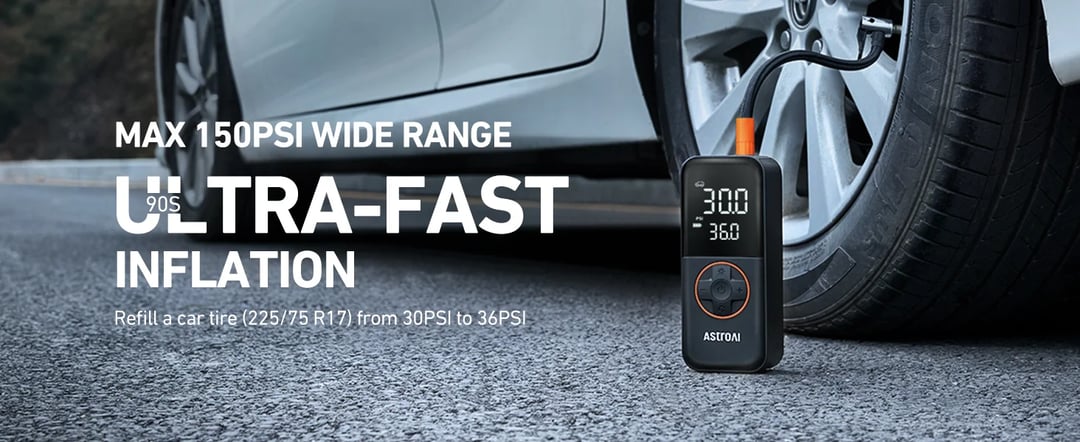
Comprehensive Dual-Power: AstroAI Handheld Cordless C2 →
Ultimate reliability with both battery and 12V corded power options for endless inflation. -
High-Efficiency Heavy Duty: AstroAI T2 Dual-Cylinder Inflator →
Maximum airflow designed specifically for fast truck and SUV tire inflation. -
Ultra-Portable Cordless: AstroAI L4 Portable Tire Inflator →
Compact, cordless convenience perfect for sedans and everyday carry.
Bicycles & Sports Equipment Parameters
Unlike automobiles with centralized placards, bicycles and sports bladders require precise calibration based on terrain elasticity, rider mass, and specific dynamic requirements. Maximum tolerances are generally molded near the inflation valve.
Bicycle Specifications
Pressure dictates rolling resistance and micro-suspension behavior.
| Type | Target PSI | Technical Impact |
|---|---|---|
| Road Bikes | 80 - 120 | Minimizes rolling resistance; prevents "pinch flats" on narrow rims. |
| Mountain (MTB) | 25 - 35 | Facilitates tread deformation over rocks. (Tubeless: 15-20 PSI) |
| Gravel / Hybrid | 40 - 70 | Transitional pressure balancing tarmac speed and dirt dampening. |
| Fat Bikes | 8 - 15 | Ultra-low pressure for maximum surface area flotation on snow/sand. |
🚴 Precision Pick for Cyclists: Need exact pressure for your ride?
Discover the AstroAI L8 Portable Bike Pump →Athletic Ball Specifications
Even ±1 PSI deviation alters kinetic rebound and aerodynamic flight.
| Ball Type | Target PSI | Standard Requirement |
|---|---|---|
| Basketball | 7.5 - 8.5 | Calibrated for standardized hardwood floor rebound metrics. |
| Soccer Ball | 8.5 - 15.6 | FIFA regulation to maintain aerodynamic trajectory & safe heading. |
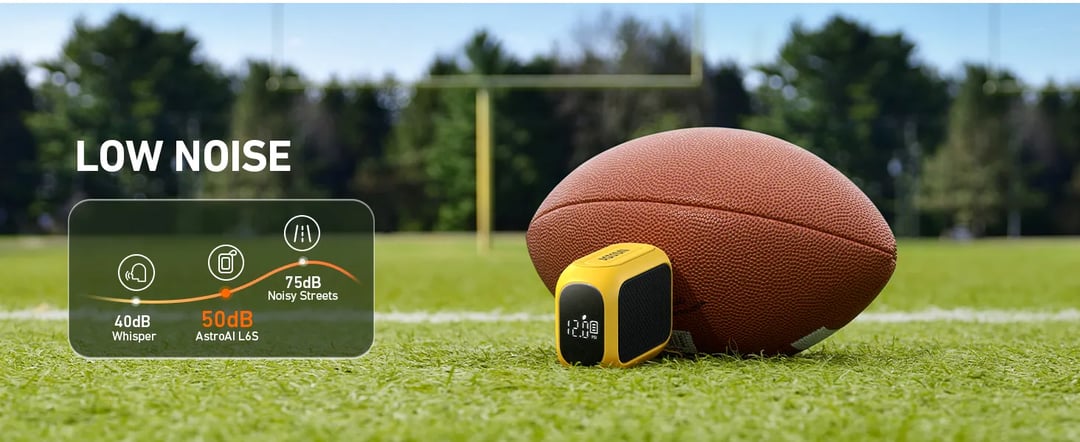
| Football | 12.5 - 13.5 | Optimized for surface grip and tight spiral stability in all weather. |
| Volleyball | 4.2 - 4.6 | Lower threshold mandated to prevent tissue damage during impacts. |
🏀 Smart Pick for Sports: Ensure tournament-ready bounce every time.
Discover the AstroAI L6S Electric Ball Pump →🌟 Need a Multi-Scenario Powerhouse?
If you are looking for an all-in-one smart inflator that effortlessly transitions from topping up your SUV tires to inflating your mountain bike and sports gear, check out our flagship multi-purpose models:
- AstroAI L7 Air: A 150 PSI cordless powerhouse. Discover the L7 Air →
- AstroAI L10 MINI: Our ultra-compact flagship inflator. Discover the L10 MINI →
4. Operational Methodology: Precision & Auto-Shutoff Tech
Modern portable digital inflators have revolutionized the pressure maintenance process, shifting it from a manual chore to an automated, high-precision task. To maximize safety and convenience, adhere to the following procedural workflow utilizing a smart inflator:
Diagnostic Assessment (Digital Precision)
Power on the inflator and couple the air chuck to the valve stem. Equipped with high-precision digital transducers, an AstroAI smart inflator instantly reads and displays your current static pressure with a minimal margin of error. Cross-reference this reading with the OEM specifications.
Parameter Configuration (Smart Modes)
Utilize the digital interface to input the exact target PSI. Rather than guessing, advanced AstroAI units offer intelligent mode-switching (Car/Bike/Ball) to pre-load common algorithmic targets, streamlining the process for multi-purpose use.
Acoustic Integrity Check
Ensure the heavy-duty chuck is mechanically locked. Perform an acoustic check—any audible hissing indicates a seal failure. Reseat the connector until hermetically sealed.
Automated Execution (Programmable Auto-Shutoff)
This is where modern engineering excels. Initiate the inflation sequence and step back safely. The AstroAI integrated system continuously monitors the airflow and triggers a precise Auto-Shutoff the exact millisecond the target parameter is achieved. This hands-free operation entirely prevents the risk of over-inflation blowouts and saves you from crouching by a noisy tire on the side of a busy highway.
Conclusion
Routine pressure validation is a critical preventative maintenance protocol. Conducting a 5-minute diagnostic check monthly, particularly during seasonal transitions, ensures optimal tire longevity, maximizes fuel economy, and significantly mitigates operational hazards.
Equip with an AstroAI Smart Tire InflatorEngineered with precision auto-shutoff transducers and calibrated pre-sets.
Literature Cited & Technical References
- National Highway Traffic Safety Administration (NHTSA). Tire Safety Ratings and Data. (Safety implications of underinflated tires). ^
- U.S. Department of Energy. Fuel Economy Benefits of Properly Inflated Tires. ^
- Michelin / Goodyear Official Engineering Guides. Max Pressures vs. Recommended Pressures. ^
- American Automobile Association (AAA). Thermodynamics and Tire Pressure Deviations. ^