[2026 Guide]The Off-Road Pressure: Terrain Strategy & Tactical Gear Setup
January 30th , 2026 | AstroAI *
Off-road Tire Pressure Guide
Why dropping your tire pressure is the single biggest upgrade you can make to your vehicle—and exactly how to do it safely.
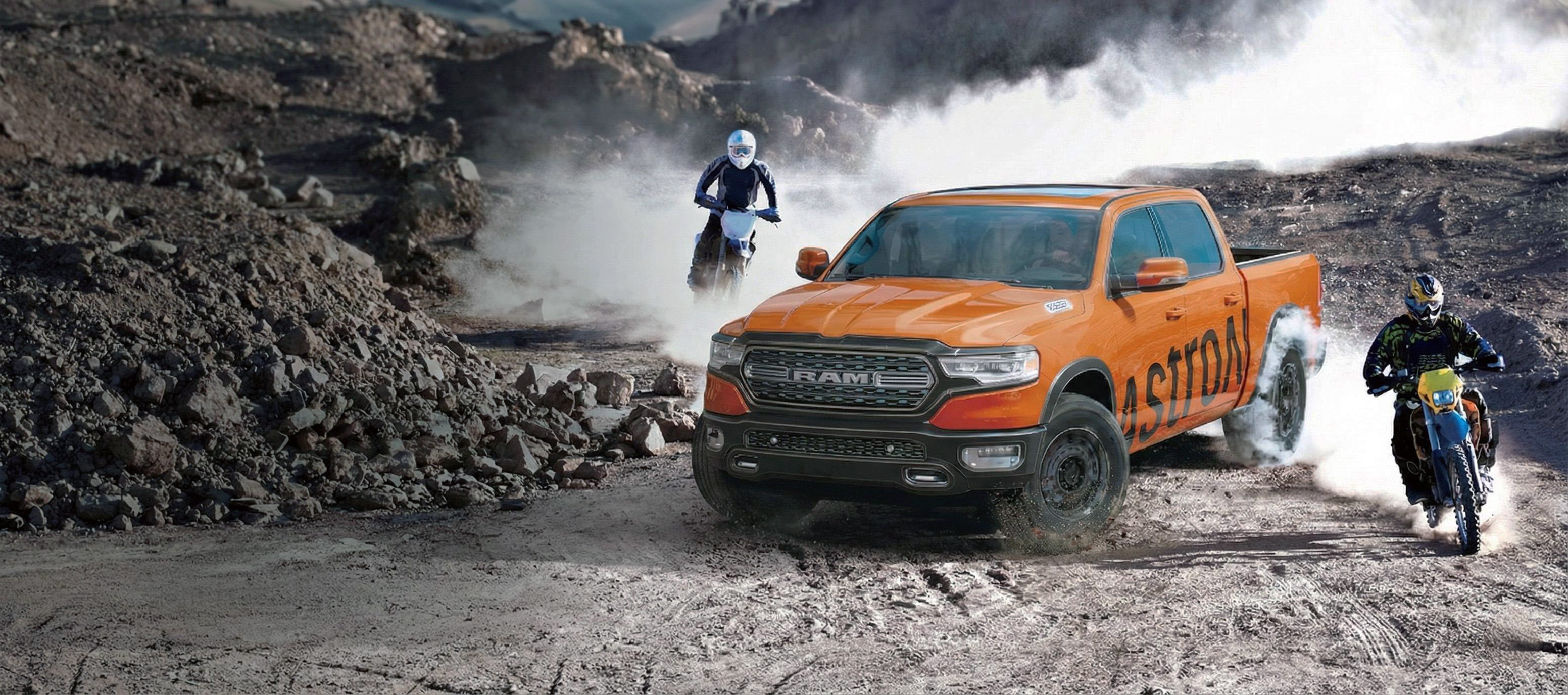
The 10-Second Read
- Physics: Tire pressure of 16 PSI increases the contact area between the tire and the ground by 150% or more.
- Safety: Speed kills soft tires. Air up before tarmac.
- Sand Rule: 15-16 PSI for maximum floatation.
- Rock Rule: 18-20 PSI for grip & protection.
- Top Gear: The AstroAI C2 is the ultimate weekend all-rounder.
In the off-road community, tire pressure is the great equalizer. Whether you drive a budget or luxury vehicle, physics works the same way.
By dropping your tire pressure from a street-legal 35 PSI to a trail-ready 16 PSI, you create a mechanical advantage known as envelopment. This allows your tires to "float" over soft dunes or mold around jagged rocks like a gripping hand, fundamentally transforming how your vehicle performs.
What Makes Low Pressure Win? The Physics Behind It
Airing down isn't just about comfort; it's about altering the physical properties of your tires to match the terrain. When you drop PSI, two critical things happen:
Massive Contact Patch
Lower pressure flattens the tire against the ground. This larger surface area acts like a snowshoe, distributing vehicle weight to prevent sinking in sand, mud, or snow while significantly increasing traction.
Envelopment (The "Grip" Factor)
A hard tire bounces off obstacles; a soft tire absorbs them. The rubber molds around rocks and ruts, mechanically "locking" onto the terrain. As a bonus, this flexibility allows the tire to absorb sharp impacts, actually reducing the risk of punctures compared to a fully inflated tire.
There is a limit. If you drop pressure too low (typically under 10-12 PSI) without special gear, side-forces can peel the tire off the rim—a "de-bead." This is why dedicated rock crawlers use Beadlock Wheels, which mechanically bolt the tire to the rim, allowing them to run single-digit pressures safely.
The PSI Strategy Map
Don't guess at the trailhead. Use this chart as your baseline. These ranges align with professional guidelines from racing suggestion.
| Terrain Context | Target PSI | Tactical Insight |
|---|---|---|
| Highway Pavement & Tarmac | 32 - 40 | Safety Critical. Low pressure at speed generates lethal heat. Always adhere to manufacturer specs here. |
| Fire Roads Gravel & Washboard | 26 - 32 | Comfort Mode. The "20% Drop" absorbs vibrations, saving your shock absorbers and your spine. |
| General Trail Dirt, Clay, Moderate Mud | 18 - 25 | The Sweet Spot. Balances traction with clearance. Prevents digging too deep while smoothing out the ride. |
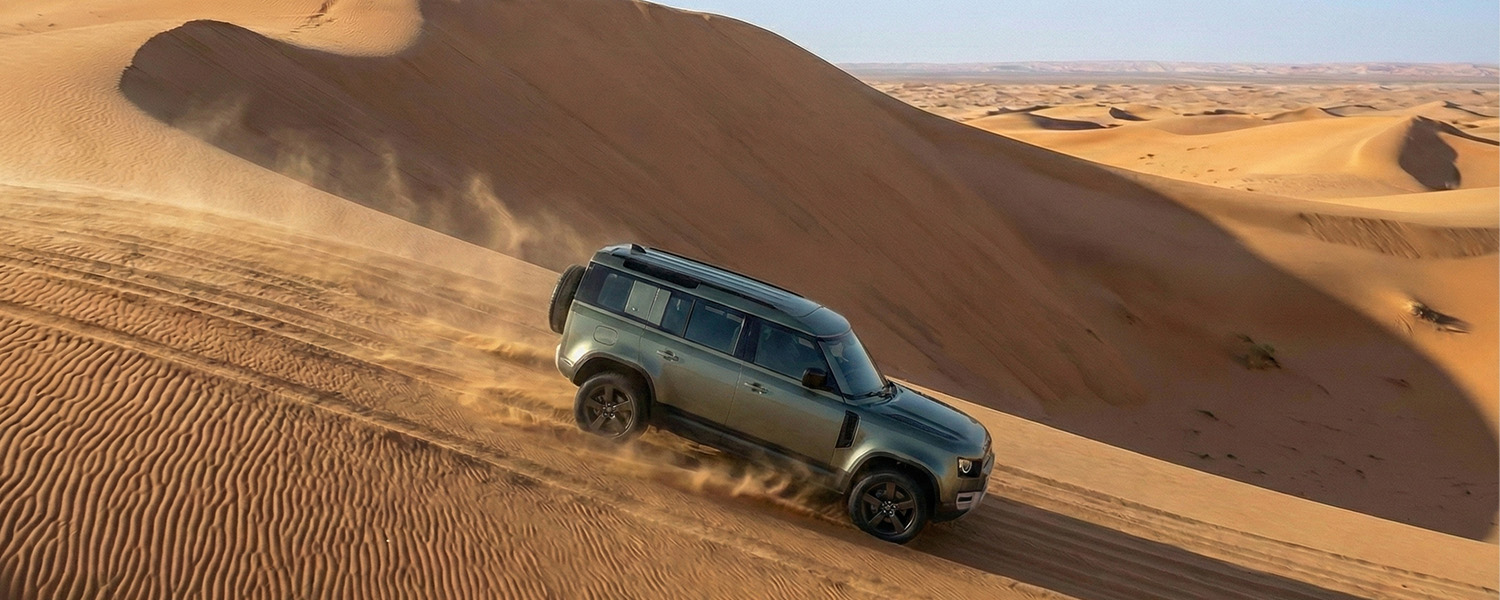
| Deep Sand Dunes & Beach | 12 - 15 | Floatation Mode. Maximizes footprint to stay on top. Caution: Avoid sharp turns to prevent debeading. |
| Emergency Deeply Stuck | 6 - 10 | The "Hail Mary". Creates a tank-track effect for maximum friction. Re-inflate immediately after extraction. |
Tactical Execution: The 4-Step Flow
Knowing the numbers is one thing; executing them is another. Forget rigid checklists—think of this as a conversation between your vehicle and the terrain. Here is the streamlined loop for a safe adventure.
Before the adventure starts, check the sticker on your door jamb. That number is your "Safety Baseline." Memorize it. You can't return home safely if you don't know what "normal" looks like before you mess with it.
Don't blindly follow a chart. Look at the dirt. Is it sharp rock? Soft sand? Match your PSI to what you see in front of you. Release pressure until the tire sidewall begins to bulge slightly—that bulge is where your traction comes from.
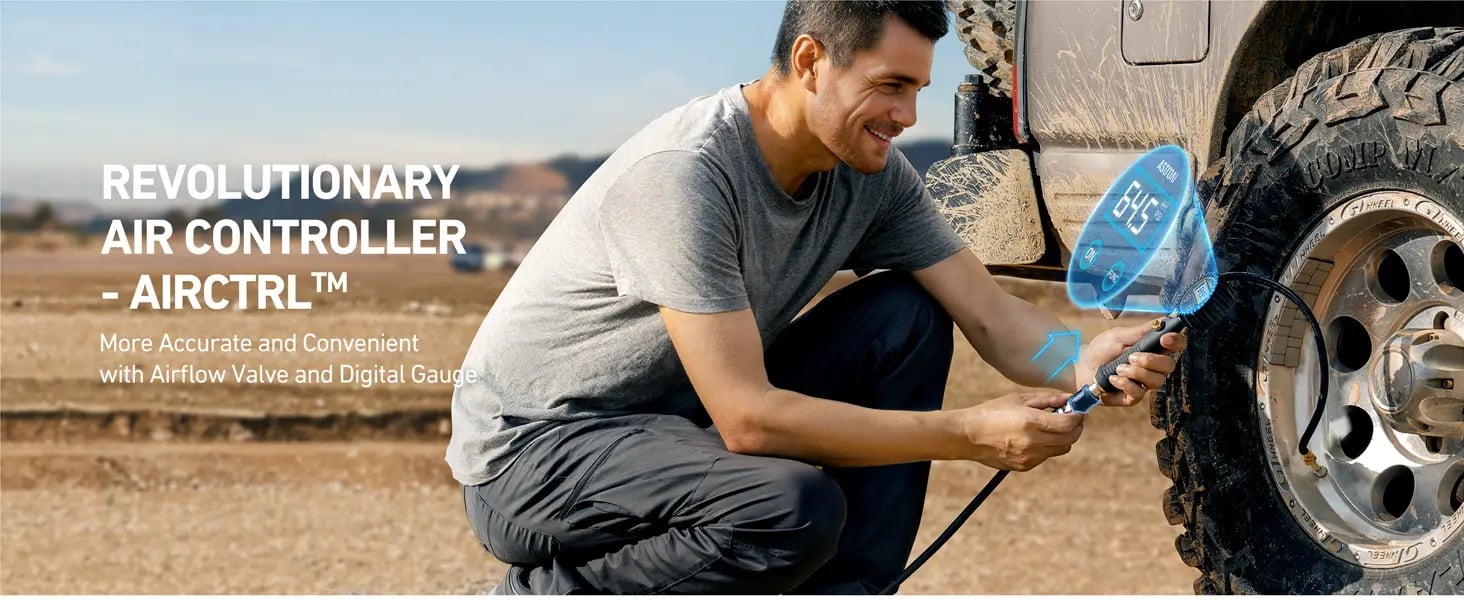
Your eyes can be deceived by uneven ground; your gauge cannot. Use your inflator to verify that all four tires are dialed into the exact same number. Consistent PSI across the board means consistent traction and predictable handling when the trail gets off-camber.
The fun stops when you hit the tarmac. Driving highway speeds on soft tires builds up dangerous heat instantly. Treat re-inflating as a non-negotiable safety ritual—never say "I'll just drive slow to the gas station." Air up right there at the trailhead.
Choose Your Tool
Not every driver needs a Baja-ready setup. We've compared the top contenders below with technical specs to identify your best match.
| Model | Role | Power & Battery | Performance (Speed) (for 195/65R15) |
Tactical Advantage |
|---|---|---|---|---|
| H2 Pro | Hybrid SUV | Dual Power DC 12V + 6000mAh Batt | 60s Top-up (30-36 PSI) | Endurance King. Huge battery + DC backup for SUVs/Trucks. |
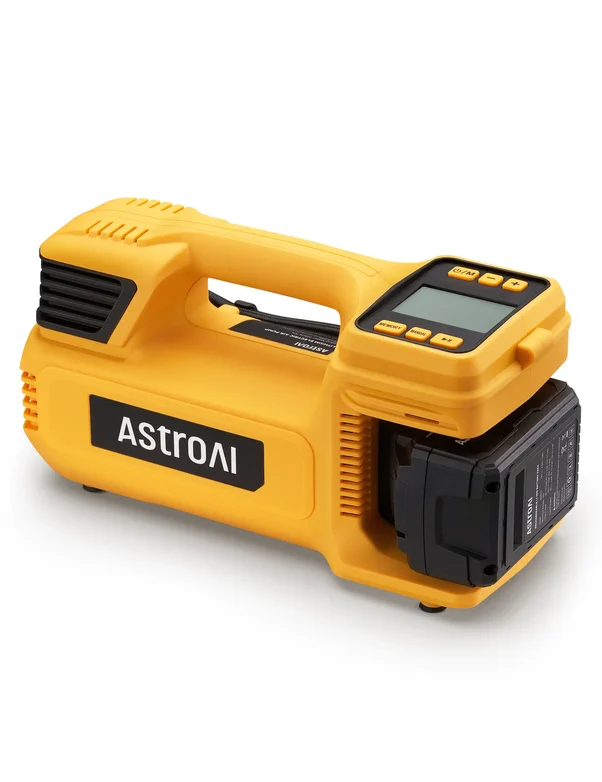
| C2 | All-Rounder | Dual Power DC 12V + 2000mAh Batt | 50s Top-up (30-36 PSI) | Best for Crossovers. Compact but redundant power. |
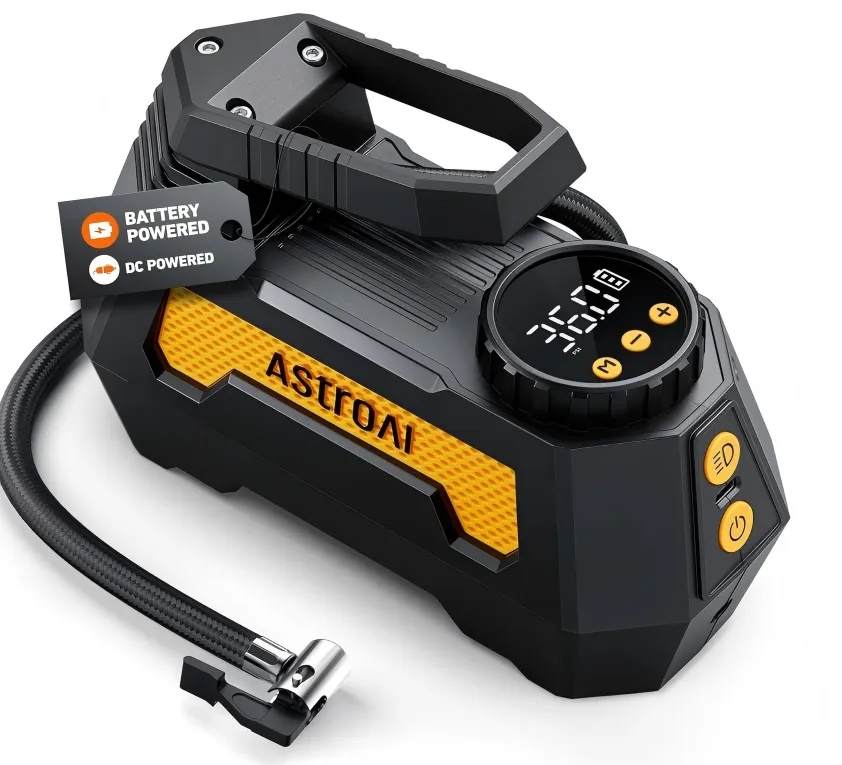
| TC4 | Pro / Tact | Cordless 4000mAh Battery | 25s Top-up (30-36 PSI) | High Torque Motor. Fastest "Grab-and-Go" deployment. |
| T6 | Heavy Duty | Direct 12V Battery Clamps Only | 20s / 75s Top-up / Full (0-36) | Speed King. High-flow cylinder for 35"+ tires. |
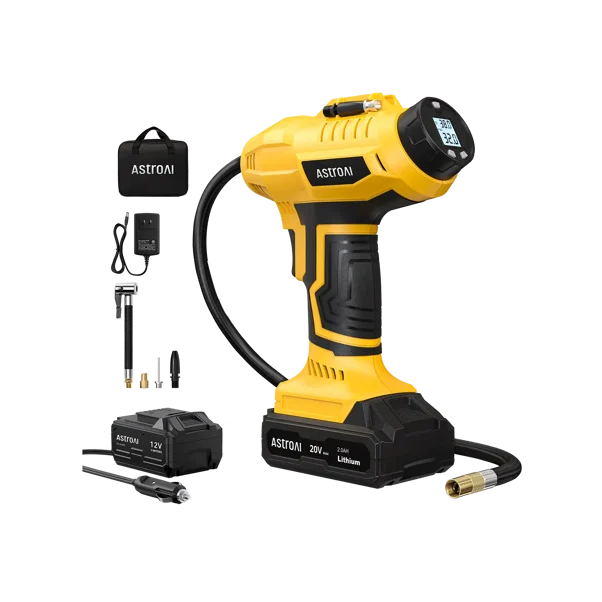
Why it wins: It cures "Range Anxiety." Battery tools are fast, but batteries die. The C2 has a Dual-Power system (Battery + 12V Car Plug), so you always have a backup power source. Fills a standard tire in 50 seconds.
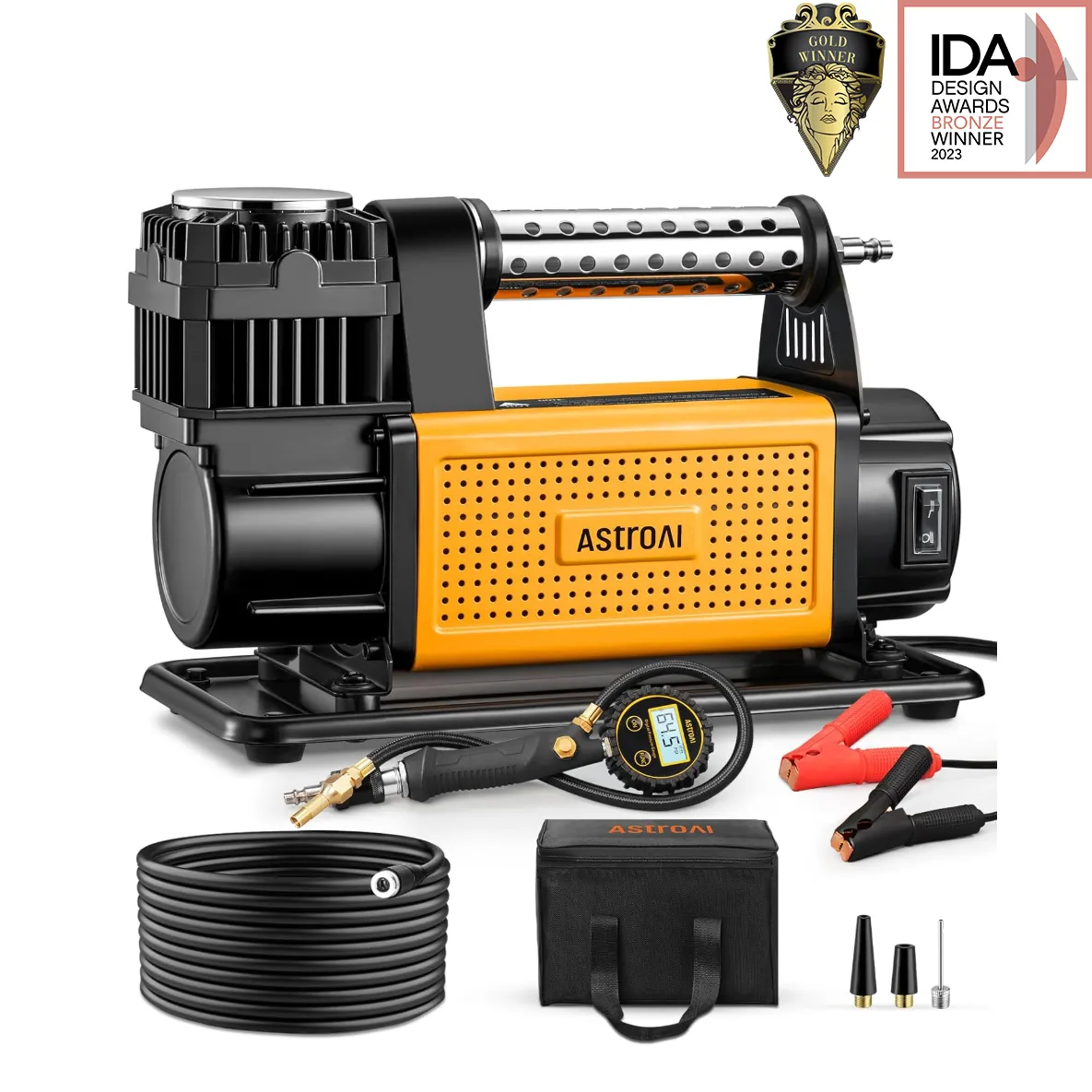
Why it wins: Built for the "Stress Test." If you run 35-inch tires in the desert heat, you need this. It uses a metal cylinder block and connects directly to the battery to manage high heat without failure.
Why it wins: "Grab-and-Go" speed. On a muddy trail, you don't want to drag cables. The TC series maintains high torque even as the battery drains, ensuring consistent speed.
Why it wins: The ultimate SUV companion. It features a massive 6000mAh battery for extended runtime but retains the critical 12V DC backup. Perfect for larger vehicles where standard portable batteries might fall short.
Technical Briefing
1. Thermodynamics 101 (Why Pumps Get Hot)
It’s not a malfunction; it’s physics. Compressing gas rapidly generates significant thermal energy. A quality off-road compressor, like the AstroAI T6, utilizes a metal cylinder block designed to act as a heat sink, drawing heat away from the core motor. Tactical Note: Always grab the unit by the insulated handle. If the body is hot, it means the heat dissipation system is working correctly to protect the motor.
2. The "Thermal Creep" Phenomenon
Tire pressure is not a "set it and forget it" variable. Friction from rocks and sand heats up the air inside your tires, causing pressure to rise (Thermal Expansion). You might air down to 18 PSI at the trailhead, but after 30 minutes of aggressive driving, you could be sitting at 22 PSI—losing your traction advantage. Pro Move: Re-check your pressure after the first leg of the trail and bleed off excess air to maintain your target grip.
Frequently Asked Questions
For deep sand, 15-16 PSI is the sweet spot. It maximizes floatation without the high risk of the tire popping off the rim (debeading) that comes with lower pressures.
Yes. Small inflators will overheat or hit their "duty cycle" limit before filling four large-volume tires. You need a high-volume unit like the T6 to handle that workload reliably.